Introduction to How Operations Works

Regardless of the size or type of business you have, there are processes and operations issues that could probably be dealt with better than they currently are. So, does that mean you need an operations manager? (Or, that you need to wear another hat yourself?) Probably. What does an operations manager, or a C.O.O. do? They find the inefficiencies or problems in your work flow, production processes, quality, supply chain, inventory, manufacturing, and everything else that effects the bottom line and ultimately the success of your company. Then they re-engineer those processes to be more efficient and profitable for the company.

The primary goal of the operations manager is the same customer-centric goal we've preached about in many other HowStuffWorks articles -- creating happy and loyal customers. If you aren't creating happy customers then why are you in business? By effectively analyzing and managing your business's operations, you can create the right products with the right features at the right cost.

Managing operations involves all of the processes in a business, including the supply chain, product quality, manufacturing, sales and marketing, safety and health, and environmental concerns. Operations managers use tools like performance measurement, flowcharts, best practices information, and benchmarking to determine where the problems are and the best methods to correct them.

The role of the operations manager varies in every industry, but even if you're a doughnut shop owner on Main Street you probably could benefit from a good hard look at your operations. In this edition of HowStuffWorks, we'll explain how managing the operations of a business works and explore some of the tools, techniques and current thought that will help you streamline your business and bring more dough into your shop!

What does 'Operations' cover?

History of Operations Research
The first applications of operations research and analysis began in 1937, when the British Royal Air Force needed to extend the range of their radar equipment to locate enemy aircraft. They began their efforts by analyzing the equipment, but eventually examined behaviors of the operating personnel and found many possibilities for improving the techniques and abilities of the operators. They also discovered shortcomings in their network.

By 1942, it had became common in the British military to deploy teams of mathematicians, physicists, and officers to test equipment and study the effectiveness of weapons and radar under actual operating conditions.

Operations research activities were brought to the U.S. in 1942 to the Naval Ordinance Laboratory. Eventually all Air Force commands were ordered to include operations research groups in their staffs. By the end of World War II military operations research was greatly expanded.

In 1948, Massachusetts Institute of Technology offered studies in Operations Research, but it was not until 1950 that industry in the U.S. began to use the techniques.

[Source: Britannica.com]

As we mentioned in the introduction, the role of "operations" varies in every business. Basically, operations looks at every process in the business, breaks it down, analyzes it, and makes it (and its final product) better. The universal goal is customer satisfaction, which is achieved through improving quality, efficiency and ultimately reducing costs for everyone. Add to this, research into innovative new products and you can come up with the perfect product with the perfect manufacturing process and the perfect marketing plan. Your customers are perfectly happy and your business takes off like a rocket! OK, that is a little oversimplified, but you get the idea.

Here are some of the processes that are linked to production and ultimately the Operations Manager.

  • New product research and development -- Operations managers are involved in decisions about the logistics of producing the new product, the costs, the skills necessary, the equipment, and the staff training to make it happen.

  • Manufacturing and production -- It is here that operations managers will often have the most impact (depending on the type of business). Manufacturing and production processes need constant review and continuous improvement.

  • Supply Chain -- Purchasing prices and levels, as well as, storage of raw materials, inventory, and other product components is part of the job of the operations manager. From an operations standpoint, these are all processes that must be reviewed frequently and improved.

  • Quality Management -- Tying back once again to customer satisfaction is the level of quality that must be maintained in both the product produced and the environment in which it is produced. (i.e. Happy workers produce better products.) Operations plays a big part in analyzing and improving quality in every facet of the business.

  • Sales and Marketing -- Market research and feedback from customers is critical to creating successful marketing programs, as well as for development of new products. By working with marketing, operations can help the company better fulfill customer needs.

  • Finance -- Budget information is important for every department of the company. The operations manager may need to be able to provide costs for each phase of the operation in order to prepare proper budgets and forecast accurate profit/loss information. Replacement and repair of capital equipment is also an issue here.

  • Human Resources -- Identifying the optimum number of employees for each department, as well as the overall organization of staff and reporting structures can also be part of the operations manager's role.

  • Facility Management -- Environmental regulations, waste removal (or elimination of waste from processes), site locations, and employee safety and health are all issues the operations manager may be involved in.
By improving the processes within a business, whether it be administrative, marketing, research and development, or anything else, a company can theoretically produce a better product, making higher profits, and create a happy and loyal customer-base. But how do you determine where the problems are?

Let's look at some of the techniques for analyzing processes within a business.

Analyzing Processes

Operations managers use mathematical and scientific data to improve and re-engineer the processes in business. They arrive at this data by analyzing the processes of all areas of the business. This process flow analysis can help you identify your company's current business situation, as well as independent departments within your business. With process analyses you can:
  • Identify improvements in your product production processes that will turn into cost savings, allowing you to pass-on savings to your customers and gain a stronger foothold in the market
  • Streamline your company's infrastructure
  • Streamline your inventory and supply chain issues
  • Identify improvements in your administrative, accounting, purchasing, and other departments to eliminate those that don't add value to the company

To do this, the process being studied is broken down into task-based chunks. These chunks are then analyzed to identify problems, or inefficiencies in the system.

Process flowcharts illustrate the process
A process flowchart graphically represents the individual "chunks" of the complete process from start to finish. For example, a customer order could be followed from the time of the order, to the order entry, to order processing, to fulfillment, and to shipping. If there are different methods for placing an order, such as by phone, order form, or web, then those processes can also be charted to determine which is the most efficient. The individual steps of the process are usually indicated as closed boxes with arrows pointing in the direction of the next step. Additional symbols are used to denote the beginning, ending, inputs, outputs, and other steps of the process. There are also software programs available to help you develop flowcharts. We'll talk about that a little later in this article.


Plot processes to determine value added
By plotting the process you can assign a value level to each step in the process so you can determine which actions add value to the overall process and which don't. With this knowledge, you can reorganize the process by eliminating those actions that don't add value. If you can't totally eliminate a step you may be able to simplify it. This type of analysis should work for any process in your company and can help you add value to your entire business.

The plot process uses symbols much like the flowchart to denote what is happening at a particular stage of the game. Plot Process symbols include:

  • Operation:
  • A main step in the process.
  • Move:
  • Movement of people or materials from one place to another.
  • Delay:
  • Any regular delay in the process, or temporary storage.
  • Store:
  • A regular controlled storage phase, as in completed inventoried products.
  • Inspect:
  • Routine inspections for quality or quantity.
  • Decision:
  • Approval or disapproval of inspection.

    Value is added only by an operation or a decision. To determine how many steps your process has that do not add value, list the steps involved in your process and insert a column for each action symbol. For each step indicate what type of action it involves (e.g. operation, move, delay, etc.). Total each column and add the operation and decision columns to get the total value adding steps, then total the other columns to get the total non-value adding steps.

    This will give you a starting point for identifying ways to improve your process.

    Modeling and simulations allow for "what-if" scenarios
    The flowcharts and plot processes you create can also be referred to as models. While these models work well for answering "what" questions, they do little for the more detailed questions like "how," "when," and "where." The complexity of the processes a typical business uses makes it very difficult to rely solely on flowcharts to determine the effects of changes. This is where simulation models will shine. Simulations allow you to vary the models to help you see more clearly the effects of changes in your process. By creating simulations of a process, you can identify shortcuts and streamline the process to save time and money.

    Simulations also allow you to experiment with "what-if" scenarios. You can determine things like:

    • The impact that absent workers can have on a process
    • The extra cost of eliminating a position that may appear to be unnecessary at first glance
    • The savings in time and money you might see by simply rearranging the work area to allow for closer storage of parts and supplies.
    • The savings in time and money you might see by having technical staff generate their own reports rather than having administrative clerks do it.
    This type of simulation involves some creative thinking and also input from those involved. Don't overlook asking the people who perform these tasks what their ideas are for making the process more efficient. They probably have the most knowledge of all about what they do and probably have quite a few ideas on improving the system.

    Critical path analysis
    This analysis is usually used to determine the minimum length of time in which a project can be completed. While not always as useful for ongoing processes, it is extremely useful for product development and other project-based work.

    Critical path analyses require that you first determine all of the steps necessary to complete the project. You then prioritize them based on the steps that are dependant on other steps being completed first, as well as those that can run parallel to other activities. In other words, those steps that following steps are dependent upon must be completed first and so on.

    You begin the chart by listing the time frame across the top. Place a circle on the graph below that represents a task and then draw a time line to the following task. The length of the line, or the space between the two tasks, represents the length of time the task will take. The line is attached to the following task and so on. The line is the "critical path." Parallel tasks, or those that are not dependent on other tasks being done first, can be drawn in below and run concurrently with the dependent tasks.

    There are actually two formats in which this chart can be drawn. One is the Gantt chart, and the other is the PERT chart. For examples and a more thorough explanation of how this charting and analysis works, go to Mind Tools.

    Queue Theory
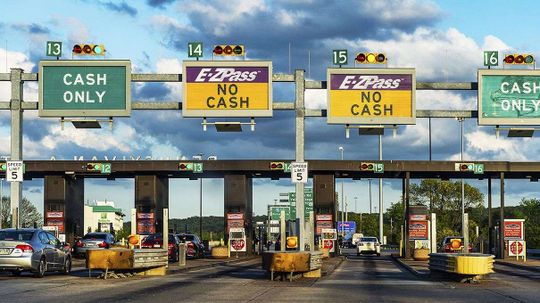
    For customer- and service-related situations, queuing is analyzed to determine things like how many gas pumps a gas station will need for a particular area, how many checkout counters a department store should have, or even how many parking spaces a restaurant needs. It also comes into play in maintenance and service situations where items have to wait (in line) for repair. Basically, in any situation where people or things have to wait in line there is a loss of value.

    Decreasing the amount of time spent waiting increases the quality of the service. This also increases the cost of offering the service. The goal of the Queuing Theory is to find that happy medium where the waiting customer experiences the least "loss of value" and you still maintain manageable costs for the improved service.

    Computing queue systems involves many formulas and algorithms, and luckily there is software with which to compute them.

    Now you should have at least a feeble grasp on how analyzing your processes works, so let's move on to what you can do once you get there. Actually, we're talking about improving quality and building quality into the process itself.

    The Quality Movement

    Unless you've been on a slots binge in a dark casino in Vegas for the last five years, you probably have at least heard of TQM (Total Quality Management), or the term "continuous improvement." These terms refers to the movement by operations managers everywhere to improve their bottom line, the success of their companies, and customer satisfaction by improving the quality of the processes that are involved in producing the product or service. Often, this push is instigated by pressure from competition. In order to get the competitive edge, you have to improve quality, price, as well as the delivery of your product. This requires the analysis of your processes that we talked about earlier, and the initiation of quality standards and improvements to those processes.

    Continuously improving quality is also known by the Japanese word "Kaizen." The key to Kaizen is eliminating waste from the business and production process. This is a way of improving production and reducing costs without much of a monetary investment.

    Applying this concept to new processes takes a lot of attention and work. By definition, continuous means that the improvement activity is designed to be ongoing. Historically, skilled craftsmen practiced this concept, without giving it name, simply because they had to compete with other craftsmen and that's what it took to make a living. They had to constantly hone their skill to be faster, better, and more cost-effective. Making this idea a part of your everyday business processes will require planning, thought, and training. It will also require constant review and re-analysis. In effect, you will be on a constant mission to find better methods of doing what you do.

    Involve Your Employees
    Beginning the task of improving your processes requires involvement from your employees. This is a very simple way to dig up some potentially great ideas. Think about it this way. You do your job every day. Every day you probably think, "hey, if I didn't have to wait for this, I could get that done a lot faster." Your employees probably have many thoughts just like that. Get their opinions and use them. Not only will you benefit by getting some great ideas, you'll also benefit because simply involving your employees creates a better working environment, more job satisfaction for them, and more support for the quality improvement goal. There is a definite correlation between employee involvement and employee satisfaction. There is the same correlation between employee satisfaction and productivity improvements.

    Keys to Making It Work
    In order for quality improvements, particularly continuous improvements, to take place, your business must be able to turn loose of its existing ideals about how it does things, and especially how upper management thinks things should be done. The mind-set to make continuous improvement work in a business will require three things:

    1. There must be motivation for employees and supervisors. They have to want to do these things. Setting up a reward program is usually key to getting the best level of support. Rewards can be monetary or non-monetary. You may battle with the HR department over this since those policies are typically set at the corporate level rather than the operational level. [Unless you function as both!]
    2. There must be a clear vision of the big picture by all employees. Your staff must understand the ultimate goal, what is expected of them, what the reward is, and how it is going to work.
    3. The necessary tools and training must be available. Your staff must have the proper tools they need to make it possible to do what is expected of them. This may or may not require much of an investment, but it is something to make sure you take into consideration when you begin planning.
    So basically, you have to have a cooperative staff who wants to make the program work, knows how their work is contributing to the whole, and has the tools and training to do it.

    By cooperation, we also mean upper level management must also buy into the idea. This doesn't just mean "talking the talk" and using "quality" words in your vision and mission statements. It means they have to "walk the walk" in order for the quality movement to succeed in your business. Remember these keys to walking the walk.

    • Many processes cross into different functional areas. Make sure you have good communication between groups so that every area can understand, work through problems, and ultimately "walk the walk."
    • In order to get true total company buy-in, set up groups of middle managers that will regularly review the process improvement activities and compare them with the original goals you've established.
    • In the same vein, set up teams of workers from all job function areas that will help ensure that the quality plan is working at the operational level. They can also help solve other problems that arise as a result of a process change and refine it to make it work.
    • Having exposure to the ultimate buyers or customers is a good wake-up call for anyone who normally doesn't see the fruit of their labor in use. By giving everyone exposure to customers and their needs, your business can reap the benefits of better understanding, as well as some good ideas for improvement.
    • Measure the satisfaction levels of both your customers and your employees, and use the feedback to further improve your quality.
    Techniques For Developing Quality Systems
    Aside from extracting quality- and process-improvement ideas from your employees and management, there is also the area of waste in which to focus your attention. Although waste can be looked at from the perspective of simply not utilizing raw materials in the most efficient way, it often considerably affects your bottom line through defective products. You can combat defects and ultimately improve quality in three unique ways:
    • Preventing defects through improved processes, training, and equipment.
    • Improve the product through re-design to reduce problems, returns, customer complaints and dissatisfaction.
    • Improve quality checkpoints on both the product prior to shipping, and the production process itself.
    To identify specific areas of waste, look at these aspects of your process.
    • The physical actions required to produce the product -- Is there unnecessary movement required by your employees such as lifting and carrying objects, bending, pushing, etc. This may not only take additional time and reduce productivity, but it may also increase chances of injury and repetitive trauma for your workers.

    • The right tools for the job -- Often a large machine is used to do a job a much smaller machine could do. This creates waste in the amount of energy consumed, as well as the additional cost of the equipment itself. Re-visit your equipment.

    • High inventory levels -- If your levels of inventory are too high you're wasting not only money on production, but also money for the space and energy required to house that inventory. (We'll go over more inventory and supply issues in the next session.)

    • Transporting parts and products -- Do your workers spend too much time moving materials and products from one area to another? Could you rearrange work spaces to bring materials closer to where they are needed, and move the space for finished products closer to the area where they are actually shipped?

    • Down-time -- Are there too many periods of down-time where employees are waiting for materials, information, or other things? Can you rearrange the work flow to engineer out some of those time lags?
    These are the main areas to review when planning for quality improvement, but as you'll see as you go through this workshop, each session includes issues that relate to quality improvements and the re-engineering of your processes.

    ISO 9000

    IOS/ISO, what gives?
    You probably have noticed that the organization's name is International Organization for Standardization while the acronym is ISO, which on the surface doesn't appear to make sense.

    It's a little known fact, however, that ISO is not actually an acronym for International Organization for Standardization. It really is a word derived from the Greek word isos, which means "equal". OK, now it makes more sense, especially if you also think about other words that use that prefix like isometric which means of equal measure.

    [Source: International Organization for Standardization web site.]

    The International Organization for Standardization is a worldwide federation of national standards groups and agencies from 140 different countries. It develops standards outlining specifications to be used to define characteristics, rules, and guidelines for products so that worldwide use is possible. It was established in 1947 to facilitate the exchange of international goods and services.

    To make your job a little easier, ISO has developed internationally recognized standards for quality known as the ISO 9000 series. This series of standards is used internationally as a foundation for developing quality systems in business. The ISO 9000 standards have recently been significantly revised and updated to be more applicable to all industries and to bring in more of a focus on continuous improvement. They also strived to create a more user-friendly document!

    The series is broken down into many documents, however the primary pieces we are interested in for this workshop are the ISO 9000:2000 fundamentals and vocabulary document, the ISO 9001:2000 quality management systems requirements document, and the ISO 9004:2000 quality management systems guidelines for performance improvements document. There is also the ISO 14000 series that deals with environmental issues. We'll talk about that a little later in this article.

    There is a good resource with instructions for implementing these guidelines into your own quality program at the ISO web site.

    Quality should be the guiding principle for every function of the business. If you can create an environment where everyone thinks about quality and is motivated to improve it, you'll have a leg up in continuous improvements to your processes.

    Now, let's move on to your supply chain and inventory issues...

    Inventory and Supply Chain Management

    If you manufacture a product, consider this: 70-80 percent of your manufacturing costs can often be found in the raw materials used to produce the product. You can considerably reduce production costs by focusing on your supply chain. In this session, we'll go over some of the strategies for managing various types of supplies, and provide tips on getting the best price possible.

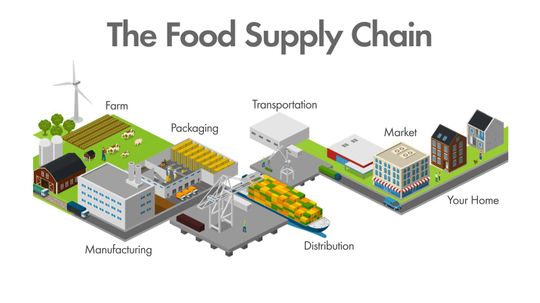
    First, let's start with how the supply chain works. The supply chain is the relationship between you and those who supply you with products, materials, and services. The chain includes the relationships as they go down the entire product production cycle. This means raw materials, distributors of the raw materials, manufacturers, distributors of the manufactured products, retailers, and finally the customer. Regardless of where your business falls in this chain, you'll have issues with supplies.

    Basic purchasing
    Purchasing for your business may include office supplies, production materials, utilities, and services by specialists. Typically, the procedures for purchases are:

    1. Specifying the information related to the needed product.
    2. Determining the supplier -- Lists of suppliers should be kept in order to compare pricing. Quotes should be requested for large orders, but are usually not necessary for small orders.
    3. Negotiating prices
    4. Purchase of supplies
    5. Delivery and inspection of the supplies
    You can reduce your costs through bulk purchases (assuming you have the storage space readily available), grouped packages of products (often available at a reduced price, but be careful of being too dependent on one supplier), purchasing in bulk by joining in with other businesses and buying the items together (aka, collective purchasing), Just-in-Time (JIT) orders (timing orders so they arrive just before you run out of your supply - saves space for storage and tied up capital.)

    Just In Time (JIT)
    Let's talk some more about JIT. This method of purchasing is part of the total quality drive. It is becoming more and more popular as software programs allow for more accurate pinpointing of process flows and timing of supply needs. The benefits of JIT are obvious. Your order comes in when you need it so long term storage of supplies is not necessary (space, energy, and transportation savings). Your money is not tied up in inventory that stands the chance of not being used due to changes in any number of things. Quality issues with the supplies are more important and dealt with more immediately than they are if your workers can simply go to storage and get another part.

    One thing to remember is that your suppliers must also work under this system. If they can't guarantee delivery on the date you indicate, then your system won't work. Make sure you have a written agreement about the delivery needs. In return, your supplier can get payments quicker and their cash flow will benefit as well.

    MRP: Manufacturing Resource Planning
    Manufacturing Resource Planning (MRP) can help you plan and determine the supply needs and timelines for new manufacturing processes. As a result, you'll be able to predict delivery times, respond to changes, and have better control over the various phases of production. See the Links section of this article for software and services related to MRP.

    Supply Chain Strategies
    If your business depends on revenues from products produced then you probably should organize the supplies and services into groups that can help you set strategies for getting the best deals and help you make the most money.

    The supplies (or commodities) you purchase fall into four categories depending on their availability, price, and quality. The first group is Leverage commodities. These are readily available, high volume supplies, that you can get from a number of suppliers. This group can save you the most money if you negotiate with your suppliers effectively. By this we mean,

    • getting competitive bids
    • requesting value-added services like inventory control services, or storage
    • breaking out transportation costs
    • collective purchases (mentioned above)

    Another group is Routine commodities. These are the everyday things you use and don't pay that much attention to. They are low priced and can be purchased in many places by anyone. This is the type of product you want to get for the lowest price possible. They don't have a big impact on your business. To get the best deals on this type of supply

    • Get competitive bids and set up a long-term agreement with the best supplier.
    • Simplify the ordering process to take the least time possible.
    • Request value-added services as mentioned above.

    The next group is Strategic commodities. These include supplies and materials that have a large impact on your success and profitability. They are more complex, not available through many sources, and are usually high dollar items. Strategies to keep your supply coming at the right price and the right time include:

    • Establish good relationships and long-term agreements with your best suppliers
    • Consider joint possibilities for new product development and branding
    • Ask for the same value-added services as you get from your Leverage commodity suppliers, such as inventory control, system links, or (if the volume is high enough) on-site representation.
    • Always have a back-up supplier.

    The final group is the Bottleneck Commodities. These items have complicated specification requirements often needing special manufacturing processes. You don't often have alternate products you can use in place of Bottleneck commodities, therefore they can have a big impact on your overall business if you can't get the supply you need. The best strategy with this type of commodity is to try and engineer the need for them out of your process. Your next best options are:

    • Finding a supplier who wants an ownership stake in the business.
    • Establish long-term agreements with preferred suppliers.
    • Exchange technology or knowledge with the supplier to create the relationship you need.

    Negotiating the Best Deal
    Not every negotiation session is centered on price. Surprised? Some people are. After all, isn't that what's important? Yes, and no. Price is important, but so is quality, delivery time, service and maintenance issues, order response time, etc. There are many things to bring to the negotiating table. And, even though price may not be what you're talking about, the end result of your negotiations should be cost savings -- often significant ones.

    Here are some angles you may not have considered when negotiating deals with suppliers.

    • Payment terms --Ask for improved delivery time or other service related to the supplies in exchange for shorter payment terms.
    • Warranty --The warranty on the products you purchase from suppliers can be negotiated considerably. You may be getting (and paying for) more warranty coverage than you need. Visit this issue and see if you can reduce the length for a reduction in item cost.
    • Timed cost reductions --If you can't get the price you need right away, but need the product anyway, try to get the supplier to agree to future reductions by a set percentage of the item cost. This would be based on the assumed increase in quantity you will need and can mean significant eventual savings for you.

    Clearly, your business's success and the value passed on to your customers is affected greatly by your supply chain. By spending the time setting some strategies and negotiating the best deals, you can keep that continuous improvement momentum going.

    Now, let's move on to less obvious part of the operations managers job.

    Sales and Marketing Applications

    Your sales and marketing efforts should walk hand-in-hand with your other business processes. After all, one of the goals of each is building competitive advantages. Basically, all of the goals associated with operations are also goals for marketing. Let's go through the elements of a marketing plan and the operations issues that correspond.

    Market and Customer Research
    In your marketing plan you research the market and your target audience. You identify their needs and psychographic profiles. You want to identify what makes them buy one product instead of another one. Now put on your operations hat. This is the information you need in order to plan and produce the products that the market wants and at the right price and quality. By working closely with marketing and studying the market research, you can assist in the development of new products, as well as the refinement of existing ones.

    Cross-communications: Make sure you are both:
    • defining the same market segment and target audience
    • coordinating information gathered in market research efforts so both of you get the information you need
    • use the technology available to you to communicate these issues and any changes that may be noted over time

    Products and Processes
    In the area of new product development, operations really needs to work closely with marketing because it really requires more than just deciding to produce a new product. There are many considerations that you should both be involved in. These include:

    • The timing between product conception and delivery -- If it's a seasonal product this can be critical.
    • The method of manufacturing may dictate pricing beyond what the consumer will pay.
    • Is it likely that there will be frequent changes to the specifications of the product?

    Cross-communications:
    • Determine what role both marketing and operations will play in the design phase.
    • Try to design the product jointly for better communications about limitations of production and other issues.
    • Debug the production process before the product is marketed.

    Productivity and Price Competition
    The less waste you have in the production process the lower your cost and the better the price for your customers. This, in turn, creates a better competitive pricing situation for marketing. With this in mind, operations should be involved when pricing is being set for the product by marketing. Considerations for pricing for both operations and marketing include:

    • Are the productivity levels in line with expected customer demand?
    • Is the production process being evaluated and analyzed for improvement and reduction in overall production cost?
    • Is pricing being set by marketing using data from operations?
    • Are promotions and special pricing offers being scheduled into production?

    Cross-communications:
    • Are savings engineered into the production process being passed onto the customer, or does market research indicate that this isn't necessary?
    • How and when is operations involved in pricing?
    • Establish cross-functional teams to study the pricing issue.

    Quality and Promotion Competition
    Since the necessary quality of the product is dictated by the market, operations must work with marketing to assure production at the quality level that the target market requires. It is up to operations to improve the quality of the production process in order to offer the product at the best price (as discussed above). At the same time, marketing is establishing promotional messages and strategies based on the assumed quality of the product. There has to be a meeting of the minds when working on these issues.

    Cross-communications:
    • Make sure operations and marketing have a consistent view of the quality level you must have.
    • Hammer out the positioning of the product through established teams that include operations and marketing.

    Time and Distribution Competition
    The responsiveness your business has to its customers' needs and demands is another area in which marketing and operations need to work cooperatively. You can bet that if your competitor can supply the product more quickly and more conveniently than you can then that's where the target market will buy it. If operations and marketing work together to establish the production time and coordinate the scheduling of the product with the delivery needs of your distributors, then you can optimize the competitive edge found in timing and distribution channels.

    Cross-communications:
    • Establish clear goals with both marketing's distribution efforts and operation's timely delivery of the product in mind.
    • Establish a system for providing flexibility to your customers both from a timeliness and delivery standpoint.

    The primary goal of operations working with marketing is to produce a product that will beat out the competition. Production and operations plays an important part in determining the competitive advantages the product will have and marketing must capitalize on that edge in order the sell the product. By having established teams that include members from both groups, you'll have a much better chance of creating and marketing a product that is a success.

    In the next session, we'll discuss issues that operations must deal with concerning the facility, the people in it, and the environment.

    Facilities Issues

    The Space and Its Terms
    The building or facility in which your business operates will have many issues that should be reviewed from an operations standpoint. For example, the space itself should be looked at with the operations hat on to determine if it can efficiently serve the needs of production whether the product produced is a physical product or a service. The issues with processes and process improvement apply to all types of businesses. Some other space issues that operations should review include:

    • Will the location serve the business's needs from a supply standpoint?
    • Does the space have adequate storage and loading dock facilities? Are these areas convenient to the production areas to reduce time lost in transportation?
    • Is the space adequate for future growth or changes in workflows? If you're moving more toward telecommuting this is a big consideration.
    • Are there safety and health issues that are inherent to your processes that cannot be dealt with in the space?
    • Considering the current processes your business has, does the space efficiently support those processes?

    Operations should also have input in the lease and its terms. Long-term plans, particularly changes in production techniques or processes, must be considered before signing on the dotted line. Visit our article about Office Space for more information about facilities.

    Human Resources
    From a human resources standpoint, the operations manager should also help in determining appropriate staffing levels for various processes in the business. For example, workloads of administrative staff should be analyzed before it is deemed necessary to hire an assistant for every executive. The process analyses, as described in the second section of this article, are also necessary for determining the minimum number of employees necessary to carry out a process. The organization of the business is also a function where the operations manager can lend insight and assistance.

    In addition to overall staffing levels and organization, you should also be involved in the protection and production level of the employees.

    Employee Health and Safety
    Since employees are a company's greatest asset, it is critical to keep them safe, healthy and on the job. Developing effective safety and health programs is important regardless of the type of business you are in. By establishing policies and setting up training programs for employees you can help reduce not only lost work time and workers' compensation costs, but turn-over and the costs related to replacing and retraining employees. The rationale? A business that obviously cares about its employees keeps those employees longer. Turn-over is lower and overall job satisfaction is higher. The ultimate result? Better production and quality, which is, of course, the goal all along. So let's look at ways to build an effective safety and health program.

    The safety and health committee
    First, you should consider setting up a central safety and health committee. This approach should involve all levels of the organization from management to administrative workers to line workers (if you produce products). It entails setting up committees that are assigned areas of responsibility like safety, health and environment, education and training, communications, housekeeping, and so forth. The chairpersons of these committees then form a central committee. Each committee meets on a regular basis to facilitate and ensure that their assigned responsibilities are carried out.

    For example, the communications committee might be responsible for posting current safety statistics in prominent places around the facility, or maintaining a safety bulletin board with useful facts and information that will be helpful and interesting to all workers. Their scheduled meetings could be used to brainstorm information for the bulletin board or compile statistics for posting.

    The central committee's meetings are used to update the safety coordinator on the activities of each group and come up with additional areas that need to be addressed. Those identified areas are then passed along to the appropriate committees.

    This type of program can significantly reduce the number of accidents your organization experiences, not only because of the safety training and education it involves, but simply because it increases the awareness of safety by your employees. When workers see and are involved in safety activities themselves, they become more in-tune with safety in general and become safer workers. Basically, you are modifying their behavior to include safety as a way of life.

    Required Safety and Health Programs and Training
    The Occupational Safety and Health Administration (OSHA) requires that certain types of businesses have written programs for safe work in and around job hazards like confined spaces or hazardous chemicals. These programs must be maintained in an area with easy access, and employees should be aware and familiar with the program requirements.

    Many of the safety and health standards that OSHA enforces also have an employee training requirement. Typically, OSHA requires that you perform training when employees are initially hired and then annually depending on the applicable standards. OSHA has set standards for safety and health for almost every imaginable safety issue. Standards on topics like Hazard Communications, Confined Space, Electrical Safety, and Bloodborne Pathogens all require specialized training and safety programs. Many of the safety and health standards also require regular inspections of your equipment, facility and other areas.

    As part of the operations team, you must be aware of all standards that apply to your business and make sure you comply with their requirements. Contact your state OSHA program, or federal OSHA if your state does not have its own program, for information on what you are required to do. You might also consider hiring safety consultants to help you write and administer these programs and train your employees.

    Even businesses that only employ office staff can benefit from safety and health programs and training. Issues like ergonomics, indoor air quality, and general office safety apply, as well as other concerns like drug awareness and hazard communication. For example, the spray adhesive your office assistant uses to mount charts on poster board may be hazardous to the health of pregnant women in the office. Safety inspections may also be important. For example, when was the last time you inspected your office fire extinguisher or smoke alarm. You do have those, don't you?

    Safety Incentives
    Besides building awareness and drawing support from employees for safety programs through the safety and health committee approach, you can also encourage safe work habits by giving safety incentives and awards. Used as a form of positive reinforcement, awards and incentives can be based on any criteria you choose.

    There are drawbacks to many incentive programs, however. Here are some of the shortcomings:

    • The award is typically not given immediately, so the action is not reinforced the way it should be for true positive reinforcement.
    • The award might be given to all workers or an entire team rather than the individuals who truly excelled.
    • The award itself may not be of value to all workers. Really, how many t-shirts or coffee mugs do you need?
    So what are the lessons to be learned here? If you offer incentives, follow this advice:
    • Make your award presentation a daily (or at most a weekly) event to shorten the time between the awarded action and award itself.
    • Vocally acknowledge employees immediately whenever they do a good job or act in a safe and responsible manner in a crisis or unexpected situation.
    • Make sure the incentives and awards you offer have value to the employees. Get their opinions on awards that would mean the most to them. You may be surprised.
    Regardless of the methods you choose for motivation and incentives in the safety and health areas, celebrate the successes your employees have and acknowledge their efforts. This is effective in any area of business and should be a requirement for all managers.

    Environmental issues
    With many safety and health issues come environmental concerns, primarily outside, but also inside the walls of your facility. The wastes and by-products of your production process have to be managed just as the process itself is. Hazardous wastes or chemicals related to the manufacturing process have strict removal and storage requirements. In many manufacturing facilities that use or produce such hazards, it is the operations manager who must be aware of the hazards and associated requirements for storage and removal.

    Inside the facility
    Inside the facility you must be aware of environmental hazards like noise and air quality, exposure to hazardous chemicals, and clean-up protocols for spills and accidents involving those hazards that can affect the health and safety of your employees. These issues are also covered by OSHA.

    Hearing Conservation programs are required for any business that has noise levels above 85 dBA averaged over an 8-hour period (Time-weighted average -TWA). For workers exposed to noise above 90 dBA averaged over an 8-hour period, there must be feasible administrative or engineering controls implemented. This means noise dampening materials must be used where possible. Hearing conservation programs require written programs for measuring noise exposure, administering regular (and pre-employment) hearing tests, evaluation of those tests, hearing protection, training for employees, and proper recordkeeping.

    Respiratory Surveillance programs are required for businesses that have airborne contaminants such as dust, vapors or gases. Where possible you are required to use engineering controls to eliminate the hazard, however, in situations where you can't do that, respirators are required to protect your employees from exposure. A respiratory program includes air monitoring to determine levels of contaminants, respirator selections, fit testing for employee respirator use, pulmonary function testing for employees, and training on the hazards and use of respirators.

    Many other environmental health hazards may exist in your facility such as indoor air quality, heat hazards, asbestos, or equipment-related hazards such as dangers from lasers. Each of these issues should be addressed and, where possible, engineered out of the process. If they can't be engineering out then personal protective equipment must be provided (at your expense) to protect your employees.

    Outside the facility
    Waste is a part of every business. Whether you manufacture a product, or offer services, there are always waste issues to deal with. This may be in the form of manufacturing emissions, residues, etc. or simply office waste. By eliminating or properly dealing with the waste your business produces, you can significantly affect your bottom line, as well as help the environment. Reducing the waste in your processes is just the first step. Consider the energy used for storing, transporting or disposing of waste. By reducing the amount of waste, you also reduce the costs associated with it.

    To begin the process of waste reduction, you first have to identify where it is in the first place. Use some of the techniques we covered in the Process Analysis section and assess the waste your business produces. Look at areas like:

    • Waste in production of product, documents or other processes
    • Waste in the packaging of those items
    • Product or document design that has inherent waste
    • The environment of your facility and problems that may lead to waste (for example, distances required to transport materials or finished products could be reduced to save on vehicle costs and emissions)
    • Waste in the inventory, storage and ordering systems
    • Waste disposal techniques and associated costs
    Once you have identified the areas where waste is occurring, begin the process of rethinking how those areas could be improved. Your best option is to eliminate the waste. Can you eliminate or reduce part of the waste through re-engineering the process? Can you re-use materials to reduce waste? Can you recycle the waste? Here are some ideas to help get you started:
    1. Use the back side of used paper for scrap or printing draft documents.
    2. Recycle office paper
    3. Remove your business name from magazines and junk mail you do not need to receive.
    4. Recycle other waste like cans, bottles, and cardboard
    5. Contact local recycling firms or Boy Scout organizations that want your recyclables
    6. Return containers or pallets to suppliers for reuse whenever possible.
    7. Put in timers or motion sensors for lights.
    These ideas can help you reduce the amount of office waste your business produces, which will also reduce the waste disposal costs associated with them. While these are voluntary actions, others may not be. The U.S. Environmental Protection Agency issues standards and requirements for waste disposal and emissions, as well as helpful guidelines and suggestions for recycling, re-using, and reducing the raw materials you use in your processes.

    For example, the EPA has enacted laws since 1938 that cover the following issues:

    • Food, drugs and cosmetics (FFDCA)
    • Insecticides, fungicides and rodenticides (FIFRA)
    • Water pollution (CWW)
    • Clean air (CAA)
    • Shoreline erosion
    • Solid waste disposal
    • Pollution prevention
    • Lead-based paint
    • Marine protection, research and sanctuaries
    • Superfund amendments and reauthorization (SARA)
    • Ocean dumping
    • Endangered species
    • Safe drinking water (SDWA)
    • Resource conservation and recovery (RCRA)
    • Toxic substances control (TSCA)
    • Surface mining control and reclamation
    • Uranium mill-tailings radiation control
    • Asbestos
    • Comprehensive environmental response, compensation and liability (CERCLA)
    • Nuclear waste policy
    • Emergency planning and community right-to-know (EPCRA)
    • Indoor radon abatement
    • Lead contamination
    • Medical waste tracking
    Visit the EPA web site for more information on EPA regulations and requirements for businesses.

    The International Organization for Standardization (ISO) also has an environmental standard referred to as ISO14000, which many businesses take part in. Sometimes industry suppliers even require participation by their customers.

    ISO 14000 was developed to address issues like environmental management systems, environmental auditing, environmental performance evaluations, labelling standards, life cycle assessments, environmental aspects in product standards, and standardized terms and definitions. Their goal is to offer a standard management system for businesses who want to be proactive in protecting the environment rather than reactive to government requirement and fines. Typically, companies who participate also reduce their waste-associated costs as well.

    Visit the ISO web site for information on ISO 14000 guidelines and certification.

    Benchmarking

    OK. So now you have reviewed your processes and discovered some ways to make changes that will improve your overall quality, create happier and healthier employees, save your business money, and improve your competitive edge. But how do you know how effective the changes will really be and how do you implement those changes once you figure it out?

    Benchmarking
    Benchmarking is studying the same processes of other more successful companies and comparing your own company's processes with them. These successful processes are also known as "best practices." Basically, what you are doing is measuring your actions and processes to see how you compare with the other businesses' actions and processes. Then you use the information you glean from the study to improve your own processes.

    The benefits of benchmarking include:

    • helping you make better informed decisions about changes to your processes
    • helping you see outside the box
    • helping create excitement and gain more support for the project
    • helping accelerate the progress of the project
    According to the Benchmarking Exchange, the top areas in 2000 for benchmarking were:
    1. Employee development
    2. Customer satisfaction
    3. Human resources
    4. Marketing
    5. Process improvement/management
    6. Employee benefits

    What is important in benchmarking is collecting the right data. You have to first determine the areas you need to benchmark. Good overall planning of the focus of your study, such as manufacturing, marketing, finance, HR, communications, etc. is critical and should be clearly documented. You should also develop your data collection surveys during the planning stage.

    Second, you have to administer the questionnaires and surveys within your own organization to collect that data you will use in the comparison. If possible, visit sites who have processes considered to be "best practices" and collect data from them to compare yours against.

    Third, you need to analyze the data. This involves comparisons of your data with the data from other similar firms (same SIC -Standard Industrial Classification) found in databases designed for benchmark comparisons.

    Finally, you have to determine what you can and can't implement and then do it.

    Are there drawbacks to using "best practices?" Some may be inclined to say yes, there can be disadvantages to benchmarking and implementing best practices standards to your processes. For example, if the biggest competitors all begin using the same processes and becoming basically more alike then where is the competitive advantage you hope to gain? A possible result is that similar companies simply make the profit necessary to survive. This, however, may really be related mostly to processes related to manufacturing and services. Which means the keys to success will still be found in new and innovative techniques.

    If you choose to use benchmarking as a tool to improve your processes do it with an eye toward encouraging more innovation and continuous improvements. Here are some other tips to make your benchmarking efforts more effective.

    • Examine all of your processes
    • Don't make the parameters of your study too wide
    • Get the commitment from everyone involved
    • Do your homework
    • Be particular about your benchmarking partners and selected "best practices" firms
    • Look into practices in other industries as well as your own
    • Implement the results accurately
    • Follow-up and test your results

    Some Final Tips About Re-engineering

    Everything that we've just discussed has been part of a term called re-engineering. There are still, however, some points that need to be made about the actual act of doing it that will help you pull the information together into a complete and logical thought. First, remember that although your ultimate goal is customer satisfaction and a healthy bottom line, this is accomplished through meeting many other goals like:
    • Improving the quality of the final product
    • Increasing the level of service
    • Shortening the length (in time) of the process
    • Increasing productivity
    • Reducing time spent waiting
    • Reducing unnecessary activities
    • Reducing costs of supplies and materials
    Some of the common techniques used to achieve those goals include:
    • Eliminating unnecessary steps in the process
    • Streamlining quality control and approval systems
    • Reducing the size of batches for more quality control and less waste
    • Sending out work that can't be done efficiently in-house
    • Cross-training employees
    • Eliminate excess movement of people, products, or materials

    Remember that you need to identify precisely what needs to be fixed. If a particular process appears OK at first look, but is having considerable problems being as productive as it should be then maybe the problem isn't with the process itself, but with the training level of the staff who perform it. Make sure you have identified exactly what needs to be improved before you start making changes.

    Don't overlook your human resources department as an area for re-engineering. The HR department is not typically one that sees a lot of re-engineering action, however, the skill level, caliber, and knowledge of your employees are really what allow your processes to work. Your HR department and their policies for professional development and training can make a big difference in your employees realizing their potential. By visiting the processes of hiring, training, promoting, and managing the HR system, you can make a big difference in the quality of work your employees produce, as well as the processes involved in hiring and training them.

    For example, by improving and speeding up the current system of resume reviews and screening applicants, you can fill positions more quickly and have a lower loss of production. This could be achieved through outsourcing or internal automation systems.

    Now let's talk about some ways to really apply all of this information to your business regardless of its size.

    Applying This Stuff to Your Business

    Every business, regardless of the size, has processes that can be improved. If you are a small business owner or operations manager then you have to agree that there is always room for improvement. As an example, let's go back to that doughnut shop in that great location on Main Street. For reasons you just can't seem to figure out, you're just not making the profits you expected even though business is good.

    First of all, begin by reviewing your monthly profit and loss statements. How bad is the actual picture? Can you identify times that are worse than others? Here are some steps that small businesses like yours can take to improve their current situation.

    • Begin by charting the slow periods your business experiences. This will allow you to adjust your staffing levels to fit the busier and less busy times of business.
    • Look at your leases, credit cards, loans, and other expenses that could be negotiated for better rates.
    • Find less expensive suppliers (get some tips from the section onSupply Chains).
    • Add menu items that might increase the total sale per customer.
    • Break down the costs of each menu item to make sure you're charging the right amount.
    • Make sure you aren't experiencing fraud by your employees. Initiate some control measures such as counting cups or other necessary items before each shift so that you know if products are being given away rather than sold.

    Keeping track of progress
    If a picture is worth a thousand words then charting the progress of your process improvements will bring about quicker understanding of the overall picture. Not only are they more interesting to look at, they also tend to be easier to understand and have more accurate representations than a verbal description of your efforts. With that said, let's go over some guidelines for making your charts say what you (and everyone else) needs to know.

    • Get input from everyone involved about the types of information to be collected and how it should be displayed.
    • Set schedules for updating charts and make sure someone is responsible for the necessary data being available on-time. (Daily, weekly, bi-weekly updates are useful for many areas.)
    • Determine the exact purpose of each chart.
    • Determine the most logical units of measure (This will require more consideration than you may think.)
    • Set up a standard format and look so that issues like "time" are always measured the same way.
    • Include your target or goal.
    • Include space for special information and notations beneath or beside the chart.
    • Include references to the yearly, monthly or weekly averages (or, year-to-date information.)
    • Include current best performance information and record best performance information.
    • Include photographs wherever possible to reinforce the message the chart is relaying.

    Illustrating your progress for workers
    Consider using the Japanese method of visual motivation (VM) to reinforce to workers the success and progress of their efforts. This can be as simple as setting up before and after charts that graphically illustrate how the process has been improved and perhaps even the savings that relate back to it. Position these around the work area near the process to which it relates.

    Post the progress charts we talked about above as well so employees can see the benefit that is coming out of the changes they are participating in.

    Glossary

    Best Practices
    Documented strategies and processes that are considered to the most effective and yield the best results.

    Collective Purchasing
    Joining other businesses of associations and purchasing supplies in bulk to get greater quantity price breaks.

    Critical Path Analysis
    The analysis of the length of time between the individual steps of a process that will help determine the shortest time possible for completing a project. The Critical Path is the longest sequence of dependent activities that lead to the completion of the plan.

    Flowchart
    A graphical representation of a process that breaks the process down into individual steps and illustrates those steps based on the action involved. Arrows called "flow lines" show the direction of the flow of the process from one step to the next. Symbols denote the actions.

    Gantt Chart
    A chart used in project management to plan and track the progress of a project. Time is indicated as columns across the chart, with individual tasks represented as arrows terminating at dots. The length and positions of the arrows show the start date and duration of the tasks. You may also use solid bars rather than arrows terminating in dots.

    ISO 9000
    A series of quality-based standards developed by the International Organization for Standardization. These standards provide standard terminology, rules and guidelines for products to facilitate the exchange of international goods and services.

    ISO 14000
    A series of environmental-based standards developed by the International Organization for Standardization. These standards provide guidelines for environmental management systems, environmental auditing, environmental performance evaluations, labelling standards, life cycle assessments, environmental aspects in product standards, and standardization of terms and definitions.

    JIT (Just in Time)
    The technique of timing supply orders so that they arrive just prior to depletion of the existing supply in order to save storage space and not tie up capital. An added benefit of JIT is the reduction in waste of supplies left over when a process of product is changed.

    Kaizen
    The Japanese philosophy that means continuous improvement and enhancements to a process. It focuses on eliminating waste from the production process, as well as identifying the areas of the business that need improvement. It also applies to everyone in the business.

    MRP (Manufacturing Resource Planning)
    The process of determining the supply needs and timelines for new manufacturing processes in order to predict product delivery schedules and respond to changes in the market or product.

    PERT chart
    Program Evaluation and Review Technique (PERT) is another charting technique used in project management to plan and track the progress of a project. Time is indicated as the columns of the graph, with circles representing the completion of tasks, and linking lines showing the time taken to achieve the tasks. The critical path is shown as the horizontal series of tasks.

    Plot Process
    A graphing technique used in operations management that helps identify the stages of a process that do and do not add value. This technique allows you to remove or restructure non-value-adding steps to save time and money.

    TQM
    Total Quality Management (TQM) is a philosophy that involves reviewing, restructuring, and improving processes within the company. This movement is not limited to those processes that are part of production, but also covers processes in all aspects of the business.

    Lots More Information

    General Operations Management Links

    Inventory Control Links Manufacturing and Engineering Links Operations Research Links Benchmarking Links Re-Engineering Links Project Management Links Supply Management Links Total Quality Management Links
    Process Analysis Links
    Queuing Theory Links