Hazards of International Banking

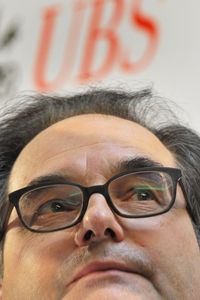
Kurer
Fabrice Coffrini/AFP/Getty Images
After Union Bank of Switzerland suffered enormous losses due to subprime lending, the powers that be -- shareholders -- put Peter Kurer on the UBS throne.

There are some hazards in international banking:

Is the bank in a country on the verge of civil war or economic collapse? Is the bank in a country notorious for its corruption? Keep your money away from fire.

Is the bank known for efficiency and smart investments or for poor customer service and federal bailouts? Again, do your homework.

Just as domestic currency can change value, so can foreign currency. If you invest your money in a foreign bank, and then the value of the foreign currency plummets, you lose money. Furthermore, if you make a bunch of money through an international investment, your profit may be greatly reduced when you convert the money to your less-than-booming home currency.

To address this issue, many international banks encourage account-holders to keep their money in interest-bearing accounts and other investments. Customers can use the money they earn on such accounts to conduct business abroad. When the currency exchange rate improves, the customer can bring some money home to the Missus or Mister.

The Federal Deposit Insurance Corporation (FDIC) does not insure foreign banks, though it can insure U.S. divisions of foreign-based banks. If you're planning on banking internationally, inquire about depositor insurance provided by the bank's home government or other entity.

Anonymous Banking
In the past, many international banks offered relative anonymity and secrecy to their customers. Since the terror attacks of September 11, 2001, however, the United States has worked with countries around the world to eliminate anonymous banking, the purpose being to uncover the identities of account-holders suspected of criminal activity. The completely anonymous, numbered Swiss account is also a myth. There is always a record of who opened the account [source: Obringer].

Because of rising international concern about money laundering, terrorism and tax evasion, many international banks will keep an eye on your account activity. If you're moving massive amounts of money around quickly, you will raise a red flag. Criminals and terrorists love to launder money through international banks, passing their questionable funds through foreign accounts, many of them anonymously held, until the legal trail is lost.

Tax evaders often use international banks to set up companies and trusts whose sole purpose is to hide money and erase its relationship to the owner. If a tax collector, such as the Internal Revenue Service, can't prove you own the money, it can't collect taxes on it. If these companies and trusts aren’t legitimate money-making entities, you’re participating in an abusive tax shelter (by U.S. law, at least). The IRS charges very stiff penalties for participating in abusive shelters. In the settlement offered by the IRS in the Son of Boss abusive tax shelter, participants paid penalties of as much as 20 percent of their unpaid tax on top of their outstanding tax liability [source: IRS].

Be careful with the offshore banks you do business with -- don't be collateral damage in the wars against tax evasion, money laundering and terrorism.

If you'd like to know more about international banking and related topics, you can follow the links on the next page.