What Country Has the Most Oil? It's Not in the Middle East

By: Jasper Merrenor  | 
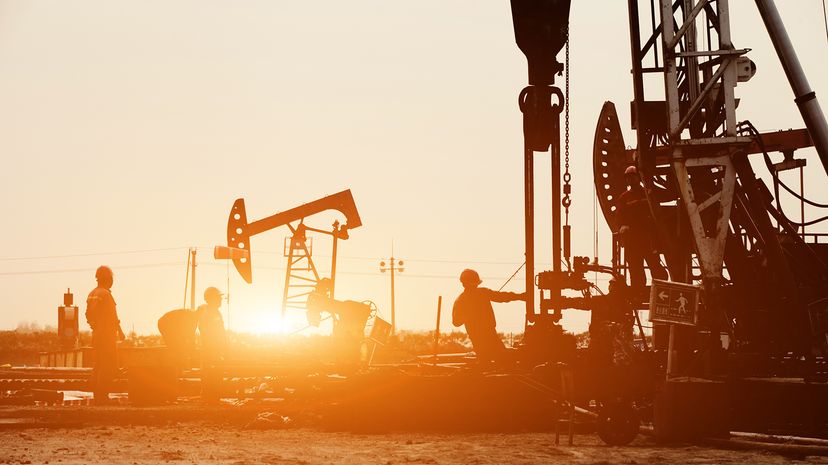
Some of these places produce more than 1 million barrels per day. pan demin / Shutterstock

When you ask what country has the most oil, the answer depends on whether you mean proven oil reserves or oil production.

Proven reserves measure how much crude oil can be economically extracted with current technology. By that metric, a small group of nations dominates global oil reserves.

Advertisement

Here are 10 countries with the most proven oil reserves and how their oil sectors shape the global energy market.

1. Venezuela

Venezuela holds the largest proven oil reserves in the world, with more than 300 billion barrels of crude oil—mostly in the Orinoco Belt.

Much of this oil is extra heavy crude oil, which is difficult and expensive to extract and refine. Political instability, international sanctions, and aging infrastructure have limited domestic production even though the country has the most oil reserves globally.

Advertisement

2. Saudi Arabia

Saudi Arabia ranks No. 2 with about 267 billion barrels of proven oil reserves.

The country plays a central role in OPEC (the Organization of Petroleum Exporting Countries). Its oil exports and spare production capacity allow it to influence global oil supply and prices. Saudi Arabia produces millions of barrels per day and remains one of the world’s largest exporters.

Advertisement

3. Iran

Iran holds more than 200 billion barrels of proven reserves, placing it among the top countries in global oil reserves.

However, international sanctions and geopolitical tensions have limited the country’s oil exports and investment in its oil sector. Despite these restrictions, Iran remains a major petroleum producer in the Middle East.

Advertisement

4. Canada

Canada’s vast oil reserves come largely from the Alberta oil sands, which contain thick petroleum deposits mixed with sand and clay.

These oil sands give Canada more than 160 billion barrels of proven reserves, though extracting them requires energy-intensive processing and raises environmental concerns.

Advertisement

Most Canadian crude oil exports go to the United States.

5. Iraq

Iraq holds roughly 145 billion barrels of proven oil reserves, mostly concentrated in giant fields in the southern region.

The country’s oil sector forms the majority of government revenue. Security concerns and political instability have sometimes slowed investment, but Iraq remains one of the largest producers among petroleum exporting countries.

Advertisement

6. United Arab Emirates

The United Arab Emirates holds around 113 billion barrels of proven reserves. Most production comes from Abu Dhabi.

Advertisement

7. Kuwait

Kuwait possesses more than 100 billion barrels of oil reserves, concentrated in a few large fields such as Burgan.

The country relies heavily on oil exports to support its economy, although it has also invested in renewable energy and petrochemicals.

Advertisement

8. Russia

It holds around 58 billion barrels of proven oil reserves and is one of the largest oil producers in the world.

Its energy sector includes crude oil, natural gas, and other petroleum liquids. Much of Russia’s production occurs in Siberia and Arctic regions, where extraction requires advanced operations.

Advertisement

9. United States

The United States ranks among the top countries in both oil reserves and oil production.

While its proven reserves are lower than Middle Eastern nations, U.S. production surged due to shale drilling in places like North Dakota and New Mexico, making it one of the largest producers globally.

Advertisement

10. Libya

Libya holds roughly 48 billion barrels of proven reserves, the largest in Africa.

Despite its vast reserves, political instability and conflict have disrupted production and exports over the past decade.

Across the world, global oil reserves remain concentrated in just a few nations. Four countries—Venezuela, Saudi Arabia, Iran and Canada—hold a large share of the planet’s proven reserves.

At the same time, the global energy landscape is changing. Renewable energy investments, environmental concerns, and climate policies are reshaping how countries manage petroleum resources and plan for the future of energy.

We created this article in conjunction with AI technology, then made sure it was fact-checked and edited by a HowStuffWorks editor.

Advertisement

Loading...