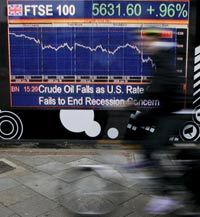
With the recent economic downturn, unemployment is an unavoidable fact of life for many Americans. The September 2011 labor statistics showed that 14 million people, 9.1 percent of the workforce, were unemployed in the U.S. [source: Bureau of Labor Statistics]. Although unemployment is down slightly since the housing bubble burst in 2009, unemployment hasn't spiked like this since it reached almost 11 percent in the early 1980s [source: Economagic]. The numbers for long-term unemployment are also pretty depressing: 42.9 percent of the unemployed in the U.S. have been jobless for 27 weeks or more [source: Bureau of Labor Statistics]. If you're unemployed or facing job loss, life can be difficult.
The unemployment rate has remained near or above 9 percent since mid-2009, which is much longer than other spikes in unemployment associated with a recession [source: Tasci]. The recession caused the initial decline in unemployment, but there are economic forces at work that are keeping it high. One problem is that, while some employers are hiring and people are looking for work, the unemployed population's skills don't always match what many employers are looking for. This is especially true in newer industries, like information technology and green energy [source: Reuss].
Advertisement
There are job openings out there, but employers still aren't hiring at the rate they were pre-recession, and there are two major factors at play. Computer technology has make it easier to produce more with fewer workers, and instead of hiring, many companies are updating equipment to make their operations more efficient rather than hiring more people. On top of new technology, it's often cheaper to outsource jobs than to hire employees here in the U.S. [source: Lee]
The other force keeping those unemployment numbers up has to do with the definition of unemployment. Technically, an unemployed person isn't just jobless but also actively looking for a job. Now that employers are starting to hire again, unemployed workers who had given up on their job searches are pounding the pavement once again [source: Reuss].
The Obama administration recently predicted that we won't see unemployment rates of less than 6 percent until 2016 but that the economy is growing, albeit slowly [source: Bruce]. Job openings are on the rise, and we're expected to see around a .5 percent drop in unemployment each year as our economy slowly recovers [source: Philadelphia Fed].
In this article, we’ll look at getting fired or laid off, coping with job loss, and when and how to resign. We’ll also explore Unemployment Insurance and COBRA, two programs designed to help the unemployed.
Advertisement