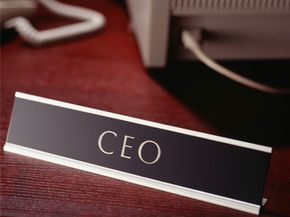
You've heard about his private jet, fancy mansion and sports car collection -- not to mention the cutthroat business practices that helped him attain all these things. He's the CEO of your company, and you're probably lucky if he knows your name.
Advertisement
Well, this is the stereotypical portrait of a CEO, anyway. In reality, yours might be a nice, down-to-earth guy, or he may be a she. Regardless, CEOs have a reputation for living luxuriously, having keen business minds and striking fear into the hearts of employees whenever they happen to drop in.
In corporate culture, a chief executive officer, or CEO, is the big boss. CEOs may not do the nitty-gritty hirings and firings themselves, but they run the show. They're in charge of setting strategy, company goals and making the high-end decisions. Because this is a big job, they delegate many of their powers to other executives. Employees can question a CEO's judgment, but only at their own risk. That's not to say CEOs are untouchable or have unchecked power. Although he or she may be top dog in the office, the CEO must answer to a board of directors.
Nevertheless, the power associated with the position often generates suspicion and controversy. When a company is suffering through a tough quarter and sends word to its employees that there won't be any Christmas bonus this year, it certainly looks bad to see a CEO take an increase in salary and fly off on vacation in the company jet. It's also suspicious when a company's CEO serves simultaneously as chairman of the board of directors. What's more, the position draws heightened scrutiny these days after such corporate scandals as Enron exposed CEOs abusing their power.
Before we delve into these and other controversies that swarm around CEOs, we need to understand what these officers do. It can be difficult to define a CEO's responsibilities due to the fact that every company's CEO is different. Because they hold the top internal position in a corporation, CEOs get to decide which duties they want to take on personally and which they want to delegate. And because every corporation has its own culture and various industries operate on different corporate structures, we'll have to look at the role from a general perspective. Let's start with a brief overview of how corporations work.
Advertisement